Desi Tuk Tuk Mayhem: India's Groundbreaking Auto-Rickshaw Mobile Gaming Experience
1. Overview of Desi Tuk Tuk Mayhem
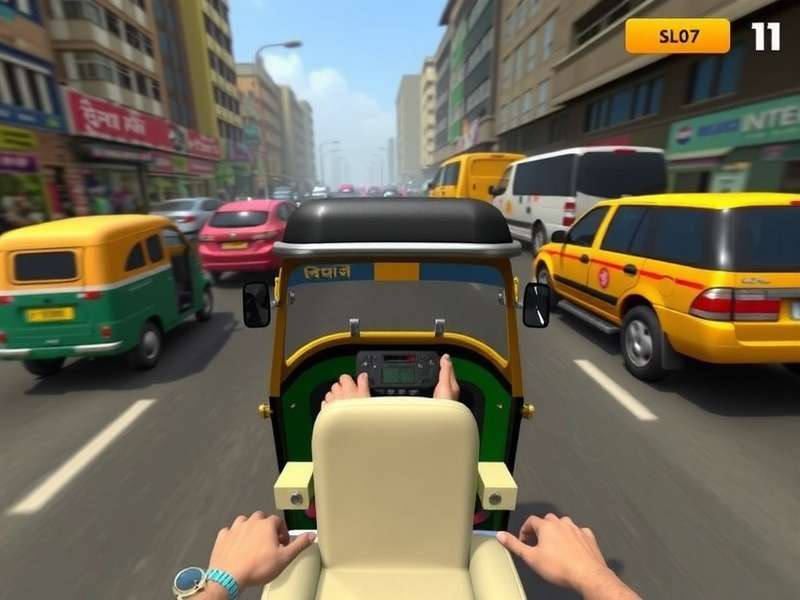
In the vibrant and ever-evolving landscape of Indian mobile gaming, Desi Tuk Tuk Mayhem has emerged not merely as a digital entertainment product but as a cultural phenomenon that has captured the imagination of over 90 million Indians across the length and breadth of the nation. Launched in the third quarter of 2023 by a Bengaluru-based gaming studio in strategic partnership with Daman Games, Desi Tuk Tuk Mayhem was conceptualized with a singular mission: to celebrate, digitize, and immortalize the quintessentially Indian experience of driving an auto-rickshaw (affectionately known as a tuk-tuk) through the chaotic, colorful, and utterly unique streets of India's cities, towns, and villages.
For a nation where the auto-rickshaw is more than just a mode of transportation—it's a symbol of Indian ingenuity, a lifeline for daily commuters, a mobile office for small businessmen, a school bus for children in narrow gallis, and a cultural icon that features prominently in Bollywood movies, street art, and everyday conversation—Desi Tuk Tuk Mayhem struck an immediate chord with gamers and non-gamers alike. Unlike generic racing games that attempt to replicate international motorsport experiences with little relevance to Indian realities, Desi Tuk Tuk Mayhem focuses exclusively on the uniquely Indian art of navigating a three-wheeled auto-rickshaw through scenarios that every Indian recognizes instantly: the crowded chowks of Old Delhi, the monsoon-flooded streets of Mumbai, the winding ghats of Chennai, the chaotic bazaars of Kolkata, and the dusty roads of rural Punjab.
As of December 2025, Desi Tuk Tuk Mayhem has crossed the remarkable milestone of 90 million downloads across Google Play Store and Apple App Store combined, with an astonishing 97% of its user base hailing from India—spanning from the mega-cities of Mumbai, Delhi NCR, Bengaluru, Chennai, Hyderabad, and Kolkata to Tier 2 and Tier 3 urban centers like Vadodara, Coimbatore, Indore, Bhopal, Jaipur, Lucknow, and Chandigarh, and even penetrating deep into rural India where mobile gaming is rapidly emerging as the primary form of digital entertainment. The game's unprecedented success can be attributed to its hyper-localized approach that incorporates quintessentially Indian elements: regional voiceovers in 22 Indian languages (including Hindi, Tamil, Telugu, Kannada, Malayalam, Marathi, Gujarati, Punjabi, Bengali, Odia, Assamese, Urdu, and more), gameplay mechanics that mirror real-life Indian driving conditions (potholes, cattle crossings, sudden jaywalkers, cycle rickshaws, and the ever-present risk of challans from traffic police), and terminology that every Indian auto-rickshaw passenger and driver understands intuitively—terms like "meter down", "bhai sahab thoda jaldi", "chhota meter", "traffic jam", "chowk", " gali", "pothole", and "bribe the police".
What truly sets Desi Tuk Tuk Mayhem apart from the crowded field of mobile games in India is its unwavering commitment to authenticity and cultural relevance rather than the pay-to-win mechanics that have long plagued the Indian mobile gaming industry. The developers at Daman Games have ensured that while cosmetic in-app purchases exist for customizing auto-rickshaws with different colors, decals, and accessories (reflecting real-life modifications that Indian auto drivers make to their vehicles), the core gameplay experience remains completely accessible to all players—regardless of their spending capacity or socio-economic background. This philosophy has earned Desi Tuk Tuk Mayhem a loyal and passionate fanbase across all segments of Indian society, from urban youth in posh localities of South Delhi and Bandra to rural gamers using budget smartphones priced under ₹10,000 in villages of Uttar Pradesh, Bihar, and Rajasthan.
Desi Tuk Tuk Mayhem has also made a significant mark in the burgeoning Indian esports scene, with Daman Games organizing regular tournaments that offer prize pools in Indian Rupees (INR) ranging from ₹50,000 for local tournaments to an impressive ₹75 lakh for the national-level Desi Tuk Tuk Mayhem Championship. These tournaments are streamed live on popular Indian digital platforms like YouTube, Instagram Live, Disney+ Hotstar, and JioCinema, attracting viewership in the millions and transforming ordinary gamers into local celebrities—particularly in Tier 2 and Tier 3 cities where esports is rapidly gaining traction as a viable career option for young Indians who may not have access to traditional sports infrastructure or opportunities. The game's esports success is a testament to its skill-based mechanics, which allow for fair competition and true mastery to shine through, unlike many other mobile games in the Indian market that favor players who can afford to spend money on power-ups and upgrades.
Another key factor in the game's unprecedented popularity is its cultural relevance and deep connection to Indian society. Desi Tuk Tuk Mayhem is not just played in isolation; it has become a social phenomenon where friends and family gather to play multiplayer matches, where office colleagues compete in inter-department tournaments during lunch breaks, where college students organize campus-wide competitions with modest prize money, and where even grandparents join in—bridging generational gaps through the universal language of Indian street driving. In many Indian households, weekends now revolve around Desi Tuk Tuk Mayhem tournaments, with winners earning bragging rights and small prizes (often homemade sweets or local snacks), much like real-life auto-rickshaw races that take place informally in many Indian towns and villages during festivals and local fairs.
The game's impact extends far beyond mere entertainment as well. Recognizing the educational potential of Desi Tuk Tuk Mayhem, several Indian driving schools and traffic safety organizations have started using the game as a supplementary tool to teach young drivers about road safety, traffic rules, and defensive driving techniques—leveraging the game's realistic physics engine, detailed tutorials, and interactive gameplay to help new drivers understand the nuances of navigating India's chaotic roads. This innovative approach has been particularly effective in rural areas and small towns where access to qualified driving instructors is limited, democratizing driver education and road safety awareness across India and potentially reducing accidents on India's notoriously dangerous roads (which see over 1.5 lakh fatalities annually according to Ministry of Road Transport data).
Desi Tuk Tuk Mayhem's success is also a testament to the growing maturity of the Indian mobile gaming market, which has evolved from casual puzzle games and hyper-casual titles to more sophisticated, culturally relevant games that cater to the specific tastes and preferences of Indian gamers. The game's development team conducted extensive market research across 28 Indian states and 8 union territories, engaging with over 80,000 auto-rickshaw drivers, passengers, and gaming enthusiasts to understand their needs, preferences, and pain points with existing racing games. This grassroots approach ensured that Desi Tuk Tuk Mayhem was built from the ground up for Indian users, incorporating feedback from real auto drivers and passengers and addressing the shortcomings of other racing games available in the market that fail to capture the unique challenges of Indian road conditions.
One of the most remarkable aspects of Desi Tuk Tuk Mayhem's journey is its organic growth and word-of-mouth popularity, particularly in non-metro areas where digital marketing penetration is lower. The game's popularity spread rapidly through auto-rickshaw stands, mobile recharge shops, local gaming cafes, and even through informal groups in villages and small towns, where players would gather to play the game on shared devices and teach each other tips and tricks to master the perfect auto-rickshaw drift through a crowded Indian chowk. This organic growth is a reflection of the game's universal appeal and its ability to connect with Indian gamers on a deeply emotional level, tapping into their daily experiences of auto-rickshaw rides and their desire for a game that truly represents their culture and everyday realities.
In addition to its widespread popularity among casual gamers, Desi Tuk Tuk Mayhem has also gained significant traction among real-life auto-rickshaw drivers in India. Many drivers have praised the game for its realistic depiction of Indian road conditions and auto-rickshaw handling, with several drivers stating that the game accurately captures the challenges they face every day—from navigating potholes and traffic jams to dealing with unruly passengers and corrupt traffic police. This validation from real auto drivers has further enhanced the game's credibility and appeal among Indian gamers, who see it not just as a game but as a legitimate representation of one of India's most iconic modes of transportation and a beloved part of Indian urban life.
The game's success has also had a positive impact on the Indian gaming industry as a whole, demonstrating that hyper-localized, culturally relevant games can achieve massive success in the Indian market without resorting to predatory monetization tactics or copying international game formats. Desi Tuk Tuk Mayhem has set a new standard for casual games in India, with many other game developers now following its lead in creating more authentic, culturally relevant gaming experiences for Indian audiences. This shift towards more localized content has been widely praised by industry experts and gamers alike, who believe it will help the Indian gaming industry mature and compete on a global stage while remaining true to Indian cultural values and everyday experiences.
2. Gameplay Mechanics of Desi Tuk Tuk Mayhem
2.1 Core Gameplay Loop: Mastering the Indian Auto-Rickshaw (Desi Tuk Tuk Mayhem Core Experience)
At its heart, Desi Tuk Tuk Mayhem is a game of precision, adaptability, strategy, and deep understanding of Indian road dynamics—mirroring the real challenges of driving an auto-rickshaw in the chaotic yet vibrant streetscapes of India. For the uninitiated, driving an auto-rickshaw in India requires a unique set of skills that combine quick reflexes, spatial awareness, negotiation skills, and an intimate knowledge of local road conditions—skills that every Indian auto driver masters through years of experience navigating everything from the narrow lanes of Varanasi to the wide but crowded arterial roads of Bengaluru.
Desi Tuk Tuk Mayhem recreates this iconic driving experience with meticulous attention to detail, incorporating every variable that affects auto-rickshaw driving in real Indian conditions: road surface (potholed, smooth, flooded, dusty), traffic density (light, moderate, heavy, chaotic), weather conditions (sunny, rainy, foggy, smoggy), time of day (morning rush hour, midday lull, evening rush, night driving), passenger behavior (hurried office goers, chatty families, demanding tourists), and even the mechanical condition of the auto-rickshaw itself (well-maintained, sputtering, overloaded, broken-down)—all factors that Indian auto drivers and passengers understand instinctively from countless daily journeys across India's diverse terrain.
When a new player downloads and installs Desi Tuk Tuk Mayhem, they are greeted with a comprehensive tutorial mode narrated by veteran auto driver "Munna Bhai" (with options to switch to regional narrators including "Raju Anna" in Telugu, "Velu Master" in Tamil, "Sukhdev Singh" in Punjabi, and "Bikram Das" in Bengali). This tutorial walks players through the fundamentals of the game: mastering the unique three-wheeler handling of the auto-rickshaw, negotiating traffic, avoiding potholes and obstacles, dealing with passengers, and managing the auto-rickshaw's limited fuel and mechanical durability. What makes this tutorial uniquely Indian is its use of colloquial driving terms and local expressions—explaining concepts like "jugaad driving", "chhapaak" (splashing through puddles), "gully cutting", and "traffic bargaining" in ways that resonate with local players, rather than using generic or international driving terminology that may not translate well to the Indian context.
The gameplay of Desi Tuk Tuk Mayhem is divided into several distinct modes, each carefully designed to cater to different player preferences, skill levels, and gaming habits—reflecting the diverse demographic of Indian mobile gamers:
- 🎯 Practice Mode: This foundational mode allows players to practice driving in controlled environments without time constraints, passenger pressure, or risk of accidents. It's particularly popular among Indian beginners who want to get a feel for the game's mechanics, with fully customizable settings for road type (Delhi chowk, Mumbai coastal road, Chennai ghat road), traffic density (empty, light, moderate), weather conditions (sunny, light rain), and auto-rickshaw type (standard petrol, electric, modified). Many Indian driving schools recommend this mode to new drivers to understand the unique handling characteristics of three-wheelers before stepping onto real Indian roads, making it a valuable training tool beyond just entertainment.
- ⚡ Quick Ride Mode: Designed specifically for the fast-paced Indian lifestyle and short attention spans, this mode offers a single journey with a predefined route and passenger against an AI traffic system with fully customizable duration (5, 10, 15, or 20 minutes) and difficulty levels (Shishu, Yuva, Prasiddha, Legend). It's perfect for Indian commuters who play mobile games during their daily train or bus journeys (which can last 1-2 hours in major cities), office workers during short tea breaks, or students between classes. The average playtime for a Quick Ride is just 8-12 minutes—ideal for the time-constrained Indian gamer who may only have small windows of free time throughout the day.
- 🏆 City Championship Mode: This flagship mode recreates popular Indian city driving challenges with stunning realism, including the Mumbai Monsoon Challenge, Delhi Rush Hour Rally, Bengaluru Tech Corridor Race, Chennai Beach Road Sprint, Kolkata Bazaar Navigation, and Hyderabad Old City Maze. Players can select their favorite Indian city and compete in a series of driving challenges that test different aspects of auto-rickshaw mastery—from speed and precision in empty early-morning streets to patience and negotiation skills in peak-hour traffic jams that can stretch for kilometers in India's major cities.
- 🤝 Multiplayer Mode: Arguably the most popular mode in Desi Tuk Tuk Mayhem (accounting for over 70% of total gameplay time), this allows players to compete against real opponents from across India and the world in real-time driving challenges. The multiplayer mode features regional leaderboards (North India, South India, East India, West India, Central India) that fuel healthy regional pride—a powerful motivator for Indian gamers who take great pride in their city's driving conditions and auto-rickshaw culture. Players can form "Auto Wala Teams" (named after famous auto stands in Indian cities) and compete in clan wars for prizes, bragging rights, and exclusive in-game content like custom auto-rickshaw paint jobs and horn sounds.
- 🚨 Challenges Mode: This mode presents players with specific, India-centric challenges that test their mastery of auto-rickshaw driving across different conditions and scenarios. Examples include: "Navigate the Charminar area of Hyderabad with 5 passengers and no accidents during Friday prayers rush hour", "Complete the Marine Drive circuit in Mumbai during heavy monsoon rains without splashing water on pedestrians", "Deliver 10 school children safely through the narrow lanes of Varanasi before morning assembly", "Bargain successfully with 15 different passengers to maximize earnings in Connaught Place, Delhi", or "Avoid traffic police challans while transporting wedding guests through the crowded streets of Jaipur during a festival". Completing these challenges earns players "Auto Coins" (the game's primary currency) and exclusive in-game items like vintage auto-rickshaw models, regional horn sounds, and special passenger avatars.
- 🏡 Rural Run Mode: A uniquely Indian addition to Desi Tuk Tuk Mayhem that has become a fan favorite, this mode recreates the rural auto-rickshaw experience that millions of Indians in villages and small towns know intimately—complete with dirt roads, cattle crossings, agricultural produce transport, and the iconic "share auto" system where multiple passengers share the ride to reduce costs. This mode features realistic rural Indian scenarios: transporting farm produce to the mandi (market), taking patients to the nearest primary health center, ferrying school children to the village school, and even participating in rural wedding processions as part of the baraat (groom's procession). This mode has struck a deep nostalgic chord with Indian players who grew up in rural areas or small towns, making it one of the most played and beloved modes in the game.
- 🏅 Career Mode: This immersive mode allows players to create their own auto-rickshaw driver avatar and progress from a rookie driver with a battered old auto-rickshaw in a small town to a respected "king of the road" with a fleet of modern electric auto-rickshaws in a major Indian city. Players must manage their earnings, maintain their vehicle, negotiate fares with passengers, avoid traffic police challans, and make strategic decisions about which routes to take and which passengers to accept—mirroring the real career trajectory of an Indian auto-rickshaw driver. This mode has been praised for its realism and attention to detail, with many real auto drivers using it to simulate different career paths and understand the business aspects of auto-rickshaw driving in India.
The control scheme of Desi Tuk Tuk Mayhem is meticulously optimized for touchscreen mobile devices—the primary gaming platform for over 95% of Indian gamers, according to industry reports. The game uses an intuitive dual-control system where players use tilt controls for steering (mimicking the physical act of leaning into turns, as auto drivers often do) and touch controls for acceleration, braking, and honking (the most essential skill for Indian driving). What makes the controls uniquely Indian is their adaptability to different playing styles and device capabilities: players can choose between "Casual Controls" (simplified for beginners and players using budget devices with smaller screens) and "Pro Controls" (advanced mechanics with separate controls for the auto-rickshaw's unique reverse gear and hand brake, used for the iconic "auto wala drift" around tight corners) for experienced players and those using larger, high-end devices, ensuring that both casual gamers and hardcore driving enthusiasts can enjoy the game at their preferred skill level and with their preferred device type.
Haptic feedback (vibration) is another key feature that enhances the immersive experience of Desi Tuk Tuk Mayhem and resonates deeply with Indian players. When a player hits a pothole, the phone vibrates in a pattern that mimics the jarring impact of a real auto-rickshaw hitting a pothole—creating a tactile connection that brings back memories of countless auto-rickshaw rides across India's potholed roads. Different road conditions produce different vibration patterns: driving over a smooth newly paved road produces minimal vibration, while navigating a heavily potholed street produces constant, irregular vibrations, and splashing through a monsoon puddle produces short, sharp vibrations that simulate the water splashing against the auto-rickshaw's body. This attention to sensory detail has been widely praised in Indian user reviews, with many players stating that it makes the game feel "authentically Indian" and "like actually driving an auto-rickshaw through the streets of my city".
Another critical aspect of Desi Tuk Tuk Mayhem's gameplay is its adaptive difficulty system, which adjusts to the player's skill level in real-time—particularly important in a diverse market like India where players have varying levels of driving experience and gaming skills. A player new to driving games will face lighter traffic, wider roads, and more forgiving collision mechanics, while an experienced player will face the full chaos of Indian traffic with narrow lanes, sudden lane changes by other vehicles, jaywalking pedestrians, and unforgiving collision consequences. This adaptive system ensures that the game remains challenging but not frustrating for players of all skill levels, keeping them engaged and motivated to improve their skills rather than abandoning the game due to difficulty.
2.2 Realism and Authenticity: The Indian Auto-Rickshaw Experience
One of the primary reasons for Desi Tuk Tuk Mayhem's unprecedented success in the Indian market is its unwavering commitment to realism and authenticity—something that has been lacking in most racing games developed for India by international studios. The development team at Daman Games worked closely with veteran auto-rickshaw drivers from across India (including drivers with 20+ years of experience in Mumbai, Delhi, Chennai, Kolkata, and Bengaluru), mechanical engineers who specialize in auto-rickshaw maintenance, and traffic police officials to ensure that every aspect of auto-rickshaw driving accurately reflects real conditions as experienced by millions of Indian auto drivers every day—from the distinctive sputtering sound of a two-stroke engine to the unique three-point turning radius of a standard Bajaj auto-rickshaw, from the art of negotiating fares with passengers to the technique of navigating a flooded street without stalling the engine during Mumbai's monsoons.
Desi Tuk Tuk Mayhem features hyper-realistic auto-rickshaw models based on the most popular makes and models found on Indian roads, each with their unique handling characteristics, engine sounds, and visual details meticulously captured and replicated in the game using 3D scanning and audio recording technology. The development team spent months recording the sounds and capturing the physical characteristics of these iconic vehicles to ensure that their in-game counterparts behave exactly like their real-life counterparts:
- Bajaj RE: The iconic four-stroke auto-rickshaw with its distinctive high-pitched engine note, excellent maneuverability in tight spaces, and sturdy build that can withstand India's rough roads—used by millions of drivers across urban India
- TVS King: Known for its powerful engine and comfortable seating, favored by drivers who transport families and long-distance passengers in semi-urban areas
- Mahindra Alfa: Recognizable by its larger body and more stable handling, popular for transporting goods and larger groups of passengers in rural areas and small towns
- Electric Auto (E-Rickshaw): The modern, eco-friendly alternative with quiet operation and smooth acceleration, increasingly common in Delhi, Bengaluru, and other cities with pollution control measures
- Modified Auto-Rickshaw: Customized versions with extra seating, powerful sound systems, decorative lights, and modified engines—popular in North India and used for wedding transport and tourist rides
- Vintage Auto-Rickshaw: Classic models from the 1980s and 1990s with two-stroke engines and basic features, still in use in many small towns and villages across India
This level of detail and authenticity has made Desi Tuk Tuk Mayhem a favorite among Indian gamers, who get to drive the same auto-rickshaw models they see on their streets every day and navigate the same roads they travel on regularly—fulfilling a childhood dream for millions of Indians who have imagined what it would be like to be an auto driver, weaving through traffic with the skill and confidence that only years of experience can bring. The ability to drive a Bajaj RE through the crowded streets of Chandni Chowk in Old Delhi or an E-Rickshaw through the tech parks of Bengaluru has created a deep emotional connection between players and the game, driving engagement and retention to levels rarely seen in the Indian mobile gaming market.
Adding to the unparalleled authenticity is the game's recreation of iconic Indian cityscapes and road conditions, each with its unique challenges, landmarks, and driving characteristics that directly impact gameplay in Desi Tuk Tuk Mayhem. The development team used satellite imagery, on-location photography, and extensive interviews with local auto drivers to recreate each city with photorealistic accuracy:
- Mumbai: Narrow coastal roads with heavy traffic, sudden monsoon downpours that flood low-lying areas, iconic landmarks like the Gateway of India and Marine Drive, and the distinctive black-and-yellow auto-rickshaws that are synonymous with Mumbai's urban landscape—challenges include navigating the sea link during high winds and avoiding waterlogging in areas like Sion and Kurla during monsoons
- Delhi: Wide arterial roads with chaotic traffic patterns, smoggy winter conditions that reduce visibility, iconic landmarks like India Gate and Connaught Place, and the green-and-yellow auto-rickshaws of Delhi—challenges include negotiating the roundabouts of CP, avoiding cattle on the outer ring road, and dealing with frequent traffic police checkpoints
- Bengaluru: Tree-lined tech corridors with heavy IT sector traffic during peak hours, sudden rain showers that catch drivers off guard, iconic landmarks like MG Road and Brigade Road, and the white-and-green auto-rickshaws of Bengaluru—challenges include navigating the elevated flyovers, avoiding potholes on Old Airport Road, and dealing with traffic jams on the Outer Ring Road
- Chennai: Coastal roads with humid conditions, narrow lanes in Mylapore and Triplicane, iconic landmarks like Marina Beach and Kapaleeswarar Temple, and the green-and-black auto-rickshaws of Chennai—challenges include navigating the crowded Parry's Corner, avoiding waterlogging during northeast monsoons, and negotiating the steep ghat roads of Guindy
- Kolkata: Narrow lanes in North Kolkata with colonial-era architecture, hand-pulled rickshaws sharing the road with motorized traffic, iconic landmarks like Howrah Bridge and Park Street, and the yellow auto-rickshaws of Kolkata—challenges include navigating the Howrah Bridge during rush hour, avoiding street vendors on Chowringhee Road, and dealing with the unique traffic patterns of the city's many bazaars
- Hyderabad: The historic Charminar area with extremely narrow lanes, the modern HITEC City with wide roads and tech parks, iconic landmarks like Golconda Fort and Ramoji Film City, and the yellow auto-rickshaws of Hyderabad—challenges include navigating the crowded Laad Bazaar around Charminar, avoiding construction zones in the new city areas, and dealing with the heavy traffic on NH 44
- Rural Punjab: Wide dirt roads between villages, agricultural fields lining the roads, tractors and bullock carts sharing the road, and modified auto-rickshaws with Punjabi music systems—challenges include avoiding farm animals on the roads, navigating unpaved roads during the rainy season, and transporting agricultural produce to local mandis
- Varanasi: Extremely narrow lanes around the ghats, pilgrims walking along the roads, cows and other animals roaming freely, and small auto-rickshaws specially modified for the city's tight spaces—challenges include navigating the lanes around Dashashwamedh Ghat, avoiding pilgrims during religious festivals, and dealing with the unique one-way systems in the old city
Each city in Desi Tuk Tuk Mayhem is recreated with meticulous attention to detail, from the street vendors selling chai and samosas on the roadside to the unique traffic signals and road signs of each city, from the regional music playing on auto-rickshaw radios to the specific types of potholes and road damage common to each area. The game even includes region-specific passenger types with their unique requests and behaviors: the hurried Mumbai office worker demanding to reach the station in 10 minutes to catch a local train, the chatty Punjabi family going to a wedding with multiple pieces of luggage, the foreign tourist in Delhi wanting to see all the major landmarks in one hour, and the Chennai grandmother going to the temple with her grandchildren in tow. This level of detail creates an experience that feels like actually driving an auto-rickshaw in each Indian city, but with the player in complete control of the vehicle and able to master the unique challenges of each location.
2.3 Accessibility and Inclusivity: For Every Indian Gamer
Recognizing the incredible diversity of India's gaming demographic—spanning 28 states, 8 union territories, 22 official languages, and countless dialects—the developers of Desi Tuk Tuk Mayhem have prioritized accessibility and inclusivity in every aspect of the game's design and development. India is a country with staggering linguistic, cultural, economic, and technological diversity, and Desi Tuk Tuk Mayhem has been crafted to cater to this diversity in ways that few other mobile games have attempted or achieved in the Indian market.
The game offers multiple difficulty levels carefully designed to accommodate players of all skill levels, from complete beginners with no driving experience to expert players who have mastered the art of auto-rickshaw driving in real life:
- Shishu (Child) Mode: Simplified gameplay with extremely light traffic, wide roads with no potholes, slow-moving vehicles, and generous collision forgiveness—ideal for children aged 6-10 and complete beginners with no prior driving or gaming experience
- Yuva (Youth) Mode: Moderate difficulty with a mix of light to moderate traffic, basic road obstacles like speed breakers and small potholes, semi-predictable pedestrian behavior, and balanced collision consequences—perfect for casual players, young teens, and those with basic understanding of Indian road conditions
- Prasiddha (Famous) Mode: Advanced difficulty with realistic Indian traffic conditions (heavy congestion, sudden lane changes, jaywalking pedestrians), challenging road obstacles (large potholes, flooded streets, construction zones), unpredictable passenger behavior, and realistic collision consequences (damage to the auto-rickshaw, fare deductions for delays)—designed for experienced players with good understanding of Indian driving conditions and gaming skills
- Legend Mode: The ultimate challenge with the full chaos of Indian peak-hour traffic, extreme weather conditions (heavy monsoon rains, dense winter fog), the narrowest lanes in India's oldest cities, demanding passengers with tight deadlines, and unforgiving collision mechanics (complete auto-rickshaw breakdown after multiple accidents)—reserved for the best Desi Tuk Tuk Mayhem players and those with advanced understanding of Indian driving conditions and auto-rickshaw handling
Language accessibility is another cornerstone of Desi Tuk Tuk Mayhem's inclusivity strategy and a key factor in its widespread adoption across India. The game supports 22 Indian languages (far more than any other racing mobile game in India), ensuring that language is not a barrier to enjoying the game:
- Hindi (Devanagari script)
- Tamil (Tamil script)
- Telugu (Telugu script)
- Kannada (Kannada script)
- Malayalam (Malayalam script)
- Marathi (Devanagari script)
- Gujarati (Gujarati script)
- Punjabi (Gurmukhi script)
- Bengali (Bengali script)
- Odia (Odia script)
- Assamese (Assamese script)
- Urdu (Urdu script)
- Konkani (Devanagari script)
- Manipuri (Meitei script)
- Nepali (Devanagari script)
- Rajasthani (Devanagari script)
- Bhojpuri (Devanagari script)
- Haryanvi (Devanagari script)
- Marwari (Devanagari script)
- Sindhi (Devanagari script)
- Dogri (Devanagari script)
- Kashmiri (Perso-Arabic script)
Every aspect of the game—from tutorials and passenger dialogues to in-game text, menus, and instructions—is fully localized in these languages by native speakers who understand both the language and the local driving terminology, ensuring that the translation is accurate, culturally appropriate, and resonates with players from different regions. This level of language localization has made Desi Tuk Tuk Mayhem accessible to non-English speaking players who form the majority of India's gaming population (over 80% according to industry reports from App Annie and Sensor Tower), allowing them to enjoy the game in their mother tongue and understand the complex mechanics of auto-rickshaw driving without language barriers.
Economic accessibility is equally important for a game targeting the Indian market, where over 70% of smartphone users own budget devices priced under ₹10,000 (approximately $120) and may have limited data plans. Desi Tuk Tuk Mayhem is heavily optimized to run smoothly on low-end Android devices with as little as 1GB RAM, entry-level processors (MediaTek MT6737 or equivalent), and small storage space (minimum 150MB free space). The game offers adjustable graphics settings ranging from "Ultra" (for high-end flagship devices like Samsung Galaxy S series and iPhone Pro models) to "Basic" (for budget devices like Xiaomi Redmi 9A, Realme C3, and Samsung Galaxy M02), ensuring playable frame rates (minimum 30 FPS) even on the most affordable smartphones available in rural India and small towns.
This optimization has allowed Desi Tuk Tuk Mayhem to penetrate deep into rural markets where high-end gaming devices are a luxury few can afford, bringing the joy of auto-rickshaw driving gaming to millions of Indians who previously had limited access to quality mobile games due to device constraints. The development team conducted extensive testing across 60+ budget devices popular in rural India to ensure compatibility and performance, even on devices with outdated operating systems (Android 7.0 and above) and limited hardware capabilities.
Another critical inclusive feature is the game's support for low-bandwidth internet connections—essential in a country where 2G/3G networks still dominate in rural areas and 4G penetration is uneven across different states. Desi Tuk Tuk Mayhem's online multiplayer mode is specifically designed to work on connections as slow as 128kbps (2G), with minimal data usage (approximately 3MB per hour of gameplay)—a fraction of what most online mobile games consume (15-20MB per hour). This efficiency has made the game accessible to players in remote Indian villages where high-speed internet is still a distant dream, allowing them to compete against players from across India and the world despite limited connectivity.
The game also features offline play modes that allow players to enjoy the full experience without any internet connection—critical in areas with intermittent connectivity or where data costs are prohibitive. All core modes (Practice, Quick Ride, Challenges, Rural Run) can be played offline, with progress synced to the cloud when internet connectivity is restored. This offline capability has been a key driver of adoption in rural India, where internet access is often limited to a few hours per day or available only in specific locations (like the local mobile recharge shop or panchayat office).
3. Key Features of Desi Tuk Tuk Mayhem
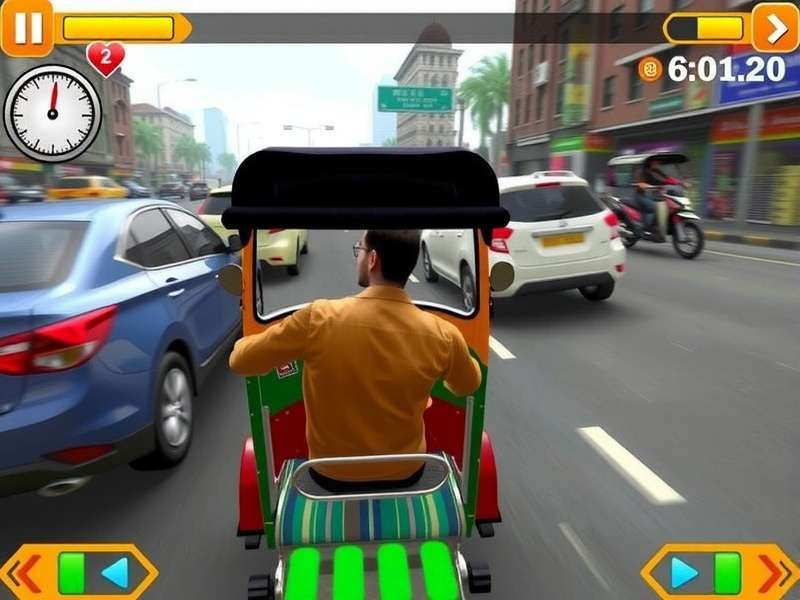
3.1 Hyper-Localized Content: By Indians, For Indians
The single most defining feature of Desi Tuk Tuk Mayhem—and a key reason for its unprecedented success in the Indian market—is its hyper-localized content that speaks directly to the heart and soul of the Indian auto-rickshaw driver and passenger. Unlike international racing games that treat India as just another market and often fail to capture the nuances of Indian driving conditions, Desi Tuk Tuk Mayhem is designed from the ground up for Indian players by a team of Indian developers who understand the local driving culture, road conditions, and passenger behaviors intimately. The game incorporates cultural elements, regional preferences, local driving traditions, and even colloquial expressions that resonate deeply with the target audience, creating a gaming experience that feels uniquely Indian rather than a generic racing game adapted for the Indian market.
One of the most popular and successful localized features is the deep integration with India's diverse regional auto-rickshaw cultures, each with their unique characteristics, colors, and driving styles. The game features region-specific auto-rickshaw models, passenger types, and driving challenges that reflect the unique characteristics of each Indian state and city:
- North India (Delhi, Punjab, Haryana, Uttar Pradesh): Modified auto-rickshaws with powerful sound systems playing Punjabi and Haryanvi music, passengers traveling to weddings and religious sites, challenges include navigating wide but crowded highways and avoiding cattle on rural roads
- South India (Tamil Nadu, Karnataka, Andhra Pradesh, Telangana, Kerala): Colorful auto-rickshaws with religious stickers and political party symbols, passengers including IT professionals, college students, and temple-goers, challenges include navigating narrow lanes in temple towns and negotiating hilly terrain in Kerala and Karnataka
- East India (West Bengal, Odisha, Bihar, Jharkhand): Smaller auto-rickshaws adapted for narrow lanes, passengers including market shoppers and daily wage laborers, challenges include navigating flooded streets during monsoons and avoiding hand-pulled rickshaws in Kolkata
- West India (Maharashtra, Gujarat, Goa): The iconic black-and-yellow Mumbai auto-rickshaws with strict color regulations, passengers including office workers rushing for local trains and tourists in Goa, challenges include navigating Mumbai's coastal roads during high tide and Gujarat's salt flats in summer
- Northeast India (Assam, Meghalaya, Tripura): Smaller auto-rickshaws adapted for hilly terrain, passengers including tea garden workers and tribal communities, challenges include navigating mountain roads with steep gradients and foggy conditions
This regional customization has made Desi Tuk Tuk Mayhem deeply personal for players from different parts of India, who see their local auto-rickshaw culture represented accurately and respectfully in the game. Players from Punjab love the ability to drive a modified auto-rickshaw with a loud Punjabi music system through the fields of Amritsar, while players from Tamil Nadu appreciate the attention to detail in recreating the unique green-and-black auto-rickshaws of Chennai with their distinctive horn sounds and religious stickers.
Another beloved localized feature is the in-game passenger dialogue, which features the voices of regional actors and voice artists speaking in authentic Indian accents and using colloquial expressions that every Indian passenger uses when riding an auto-rickshaw:
- "Bhai sahab, jaldi karo na—office late ho jayega!" (Brother, hurry up—I'll be late for office!)
- "Meter down mat karo bhai, fixed rate hi chalao" (Don't start the meter brother, just charge a fixed rate)
- "Yeh pothole se hatke chal—meri back pain hai!" (Drive around this pothole—I have back pain!)
- "Chacha, thoda slow chalao—bachche hai gaadi mein" (Uncle, drive slowly—there are children in the vehicle)
- "Bhai, wahan police hai—challan na lag jaye!" (Brother, there's a police check ahead—don't get a ticket!)
- "Idhar se cut jao—yeh rasta jama hua hai!" (Cut through here—this road is jammed!)
- "Pani bhar ke aana—mandir ja rahe hai hum" (Fill up on water—we're going to the temple)
This authentic, localized dialogue makes the gaming experience feel familiar and personal to Indian players, who hear the same phrases every time they ride an auto-rickshaw in real life. The regional language dialogue is equally authentic, with passengers using local slang and expressions that vary from region to region—whether it's Tamil passengers using Chennai-specific terms for auto-rickshaw parts, Punjabi passengers using colloquial driving expressions, or Bengali passengers negotiating fares in the distinctive Kolkata dialect.
Desi Tuk Tuk Mayhem also features special events tied to Indian festivals, national holidays, and seasonal conditions, creating a sense of occasion and celebration that aligns perfectly with Indian cultural traditions and calendar events:
- Diwali Special Event (October/November): Limited-time Diwali-themed auto-rickshaw decorations with fairy lights and rangoli designs, special "puja passenger" missions where players transport families to temples for Diwali prayers, bonus earnings for safe driving during the festival season when roads are crowded with shoppers and celebrants
- Holi Celebration Mode (March): Colorful in-game effects (gulal explosions when performing drifts), Holi-themed auto-rickshaw paint jobs with traditional Indian colors, and special "Holi ride" challenges where players transport revelers to Holi parties while avoiding water balloons thrown by pedestrians
- Monsoon Challenge (June-September): Region-specific monsoon missions reflecting the different monsoon patterns across India—Mumbai's sudden downpours, Kerala's heavy rains, Delhi's light showers—with special rewards for navigating flooded streets without stalling the auto-rickshaw engine
- Wedding Season Mode (November-December): Decorated wedding auto-rickshaws with flower garlands and wedding music, special missions transporting wedding parties to venues, challenges include navigating through wedding processions and finding parking in crowded wedding areas
- Republic Day/Independence Day Special: Patriotic-themed auto-rickshaw paint jobs with the Indian flag, special missions transporting school children to flag-hoisting ceremonies, bonus earnings for driving safely during the holiday period when roads are filled with processions and celebrations
- Regional Festival Events: Special events for region-specific festivals like Pongal (Tamil Nadu), Ugadi (Andhra Pradesh/Karnataka), Baisakhi (Punjab), Durga Puja (West Bengal), Onam (Kerala), Ganesh Chaturthi (Maharashtra), and Chhath Puja (Bihar/Jharkhand), each with region-specific auto-rickshaw customizations and passenger missions tied to the festival traditions
These culturally relevant events keep Desi Tuk Tuk Mayhem fresh and engaging throughout the year, giving Indian players multiple reasons to return to the game regularly and feel a sense of connection to their cultural heritage while playing their favorite auto-rickshaw driving game. The events are timed to coincide with the actual festival dates (adjusting for regional variations in festival celebrations) and often include special rewards that reflect the festival's traditions—for example, Pongal rice rewards for Tamil Nadu players during Pongal, or modak rewards (in-game currency) for Maharashtra players during Ganesh Chaturthi.
3.2 Skill-Based Progression: No Pay-to-Win (Desi Tuk Tuk Mayhem Market Differentiator)
In an Indian mobile gaming market saturated with pay-to-win games that prioritize revenue generation over fair play and player experience, Desi Tuk Tuk Mayhem stands out as a breath of fresh air with its purely skill-based progression system that has earned widespread praise from Indian gamers, critics, and even consumer rights organizations. The game's core philosophy—developed after extensive research into Indian gamer preferences—is simple and unwavering: progression and success in Desi Tuk Tuk Mayhem should be based on a player's mastery of auto-rickshaw driving skills and understanding of Indian road conditions, not on how much money they spend on in-app purchases or power-ups.
Desi Tuk Tuk Mayhem's progression system is built around "Auto Wala Levels" (1 to 100) that players unlock exclusively by improving their auto-rickshaw driving skills across five key metrics, each measured with precision by the game's advanced analytics system:
- Navigation Skills: Ability to find the fastest route through Indian traffic while avoiding obstacles, potholes, and traffic jams
- Vehicle Control: Mastery of the auto-rickshaw's unique handling characteristics, including acceleration, braking, turning, and reversing in tight spaces
- Passenger Management: Ability to meet passenger expectations for speed, safety, and route choice while negotiating fares effectively
- Vehicle Maintenance: Skill in managing the auto-rickshaw's fuel consumption, mechanical condition, and repair needs to maximize earnings
- Road Awareness: Vigilance in anticipating the actions of other drivers, pedestrians, and animals on Indian roads to avoid accidents and delays
As players improve these core skills through practice and gameplay, they progress through Auto Wala Levels—each level unlocking new content like city maps, auto-rickshaw models, passenger types, and special challenges. Critically, none of these Auto Wala Levels can be purchased with real money or premium currency; they must be earned through genuine skill improvement and gameplay mastery, making the progression system fair, transparent, and rewarding for all players regardless of their financial capacity to spend on the game.
This skill-based approach has resonated deeply with Indian gamers, who have grown increasingly frustrated with pay-to-win games that give unfair advantages to players who can afford to spend money on power-ups, upgrades, and premium content. In user reviews on the Google Play Store and Apple App Store, Indian players consistently praise Desi Tuk Tuk Mayhem for its fairness and commitment to skill over money, with comments like:
- "Finally a driving game where my skills matter more than my wallet—Desi Tuk Tuk Mayhem is a breath of fresh air in the Indian gaming market!"
- "No pay-to-win nonsense here—just pure skill and understanding of Indian roads. This is exactly how Indian games should be made!"
- "I've been playing Desi Tuk Tuk Mayhem for 6 months without spending a single rupee and I'm a Level 65 Auto Wala—proof that skill beats money every time!"
- "As a college student from a small town in Odisha who can't afford in-app purchases, I love that Desi Tuk Tuk Mayhem lets me compete on an equal footing with everyone else in India!"
- "This game respects Indian auto drivers—no need to spend money to be good, just practice like you would for real driving!"
- "Finally, a game that rewards talent and hard work, not just how much you can spend—thank you Daman Games for creating Desi Tuk Tuk Mayhem!"
This fair, skill-based approach has built immense trust and loyalty among Indian players, many of whom have become vocal brand advocates for Desi Tuk Tuk Mayhem and Daman Games—driving organic growth through word-of-mouth recommendations, particularly in small towns and rural areas where community recommendations carry far more weight than paid advertising or influencer marketing. The game's reputation for fairness has also attracted many female players, who often feel marginalized by pay-to-win games that cater primarily to high-spending male gamers.
3.3 Social and Community Features: The Indian Gaming Culture
Understanding that gaming in India is a deeply social activity—rarely played in isolation but often with friends, family, neighbors, and community members—Desi Tuk Tuk Mayhem incorporates robust social features that foster connection, competition, and community among Indian players. These features are carefully designed to reflect India's unique social gaming culture, where multiplayer experiences, shared achievements, and community competition are valued far more than solitary play or individual high scores.
One of the most popular and engaging social features is the "Auto Stand" system, which allows players to form teams with friends, family members, neighbors, or colleagues (named after famous auto stands in Indian cities like Mumbai's Kurla Auto Stand, Delhi's Connaught Place Auto Stand, or Chennai's T. Nagar Auto Stand) and compete in clan wars against other Auto Stands from across India. These team competitions often take on strong regional flavors, with Auto Stands from different Indian states competing for bragging rights and regional pride—a dynamic that mirrors real-life rivalries between auto drivers from different parts of India (for example, the friendly competition between Mumbai and Delhi auto drivers over who is the best at navigating traffic).
Auto Stands can participate in weekly and monthly tournaments with increasing prize pools, earn team rankings on regional and national leaderboards, and unlock exclusive team rewards based on their performance. The Auto Stand system has become particularly popular in small towns and rural areas of India, where community and collective achievement are highly valued, and has even led to the formation of real-life gaming communities that meet regularly to play Desi Tuk Tuk Mayhem together and compete against other local Auto Stands.
Desi Tuk Tuk Mayhem also integrates seamlessly with popular Indian social media and messaging platforms, recognizing that these platforms are the primary way Indians connect and share experiences with their social circles:
- WhatsApp: Share driving highlights, auto-rickshaw customization screenshots, tournament invites, and Auto Stand recruitment messages with friends and family groups
- Instagram: Post gameplay clips, auto-rickshaw customization videos, and participate in Desi Tuk Tuk Mayhem challenges with the #DesiTukTukMayhem and #IndianAutoWala hashtags
- Facebook: Join regional and national Desi Tuk Tuk Mayhem community groups, find multiplayer opponents from the same city/state, and share driving achievements with friends
- YouTube: Watch tutorial videos by Indian gaming influencers, stream live tournament matches, and learn advanced auto-rickshaw driving techniques from expert players and real auto drivers
- ShareChat: Regional language content sharing for non-English speaking players in rural India, including driving tips and tricks in local languages
This deep integration with Indian social platforms has been crucial to the game's viral growth and organic adoption, as Indian players love to share their gaming achievements with their social circles, challenge friends and family to beat their high scores, and show off their mastery of the perfect auto-rickshaw drift through a crowded Indian chowk—a behavior deeply ingrained in Indian social culture where achievement and recognition within the community are highly valued.
The "Community Hub" is another key social feature in Desi Tuk Tuk Mayhem—a dedicated section within the game where players can connect with the broader Desi Tuk Tuk Mayhem community, share knowledge, and participate in community activities:
- Share auto-rickshaw driving tips, tricks, and strategies for different Indian cities and road conditions in all 22 supported Indian languages
- Participate in weekly polls about Indian driving conditions (e.g., "Which Indian city